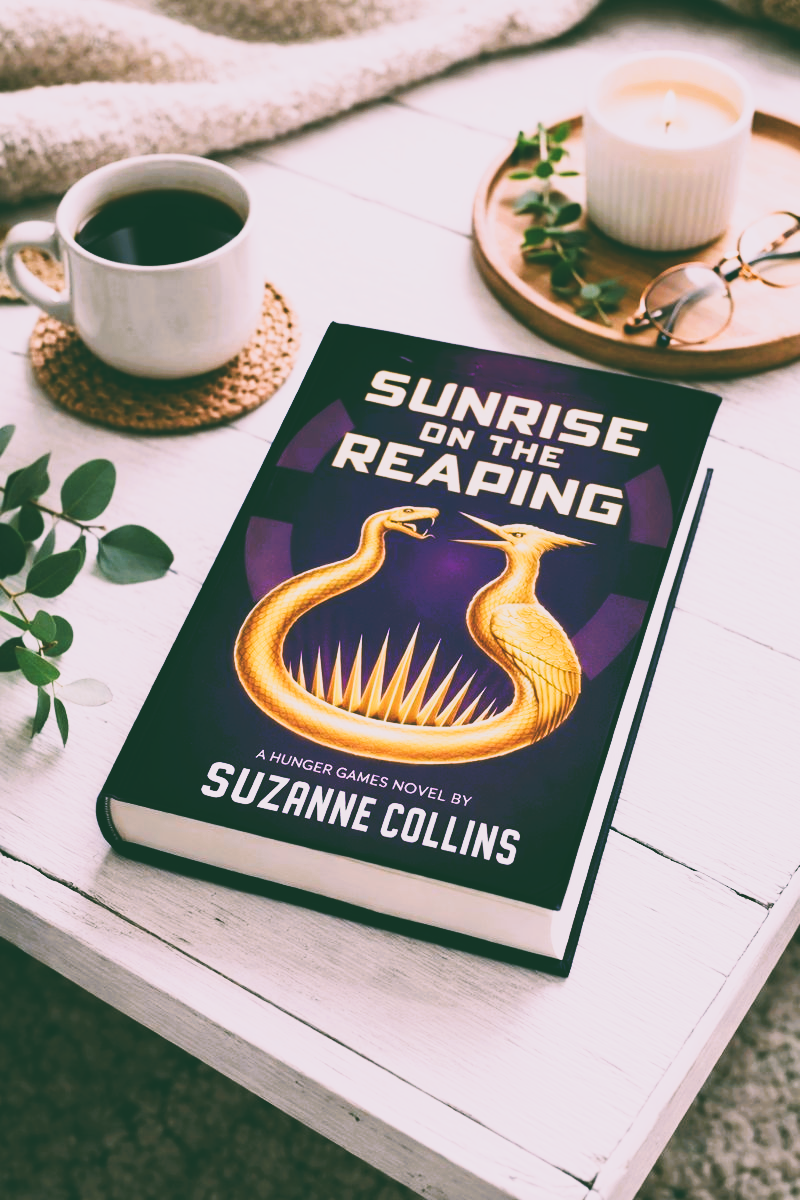

There is a difference between a dystopia that shocks and one that explains. Sunrise on the Reaping belongs to the second kind. Suzanne Collins is not trying to surprise us with The Hunger Games anymore. She is showing us how a system like Panem learns to perfect itself. A Description of things to come, like prequels tend to do.
The Inheritance of Violence
Set decades before Katniss Everdeen ever volunteers, the novel centers on Haymitch Abernathy during the 50th Hunger Games. This is not the broken mentor we already know, but the boy before the damage calcifies. The world is already brutal and efficient. The rules are refined. The spectacle is confident. The Capitol has mastered the cruelty housed within its walls.
What Collins makes clear is that dystopias do not need escalation to remain effective. They need repetition. The Games function less as punishment and more as inheritance. Each generation is taught, carefully and publicly, where power lives and what resistance costs.
A System That Explains Itself
Collins has always written with clarity, there is no excess. Scenes move with the precision of a broadcast movie. That restraint mirrors the Capitol’s worldview. Everything has a place. Everything has a purpose. Even grief is timed.
The violence does not feel louder than in earlier books. It feels colder. That is the shift. By the 50th Games, brutality no longer needs justification. It has become tradition. The real horror is not the arena, but how fluidly everyone falls into sync with its tyranny.
Character as Evidence
Haymitch is not framed as a symbol or a prophecy. He is evidence. Through him, Collins shows how resistance is not born heroic. It is born reactive, improvised, and often punished more harshly for being clever than for being defiant.
The novel’s emotion comes from watching intelligence become a liability. Haymitch learns too quickly how the system works, and that understanding costs him everything. Collins focuses on the small moments that hollow a person out. The rule was bent once and never forgiven. The realization that survival is not the same as winning.
Propaganda Without the Mask
What Sunrise on the Reaping does better than most dystopian prequels is refuse nostalgia. There is no romantic groundwork being laid for the rebellion to come. Instead, Collins shows how propaganda tightens over time. The Capitol’s messaging is smoother, more confident, and more cynical. It does not argue its case. It performs it.
The citizens of Panem are not convinced. They are conditioned. That distinction matters. The novel understands that authoritarian systems do not rely on belief. They rely on exhaustion.
The Cost of Knowing Too Much
If the book strains at times, it is in its emotional reasoning. The inevitability of what is to come presses hard in the read. Readers familiar with Haymitch’s future know there is no escape hatch waiting. That knowledge can make the experience feel bleak even by dystopian standards.
But again, that may be the point. Sunrise on the Reaping is not interested in hope as a reward. Its interest is seeing truth as a burden.
Reading this novel feels like watching a machine being calibrated. Not built. Collins is not expanding the Hunger Games universe. She is narrowing its focus, showing us exactly how a society teaches itself to accept the unacceptable.
In the end, this is not a story about the beginning of rebellion. It is about the moment when survival becomes a form of complicity, and the terrible clarity that comes with understanding that too late.
A fantastic addition to the world build. I recommend this read for anyone who likes dystopian narratives and warnings about possible futures.

Leave a Reply