
As the audio book boom grows, so do the cracks in the system—especially for indie authors. Here’s what’s going wrong with Audible’s latest moves—and why the writing community is calling them out.
The Return Policy That Devastates Royalties
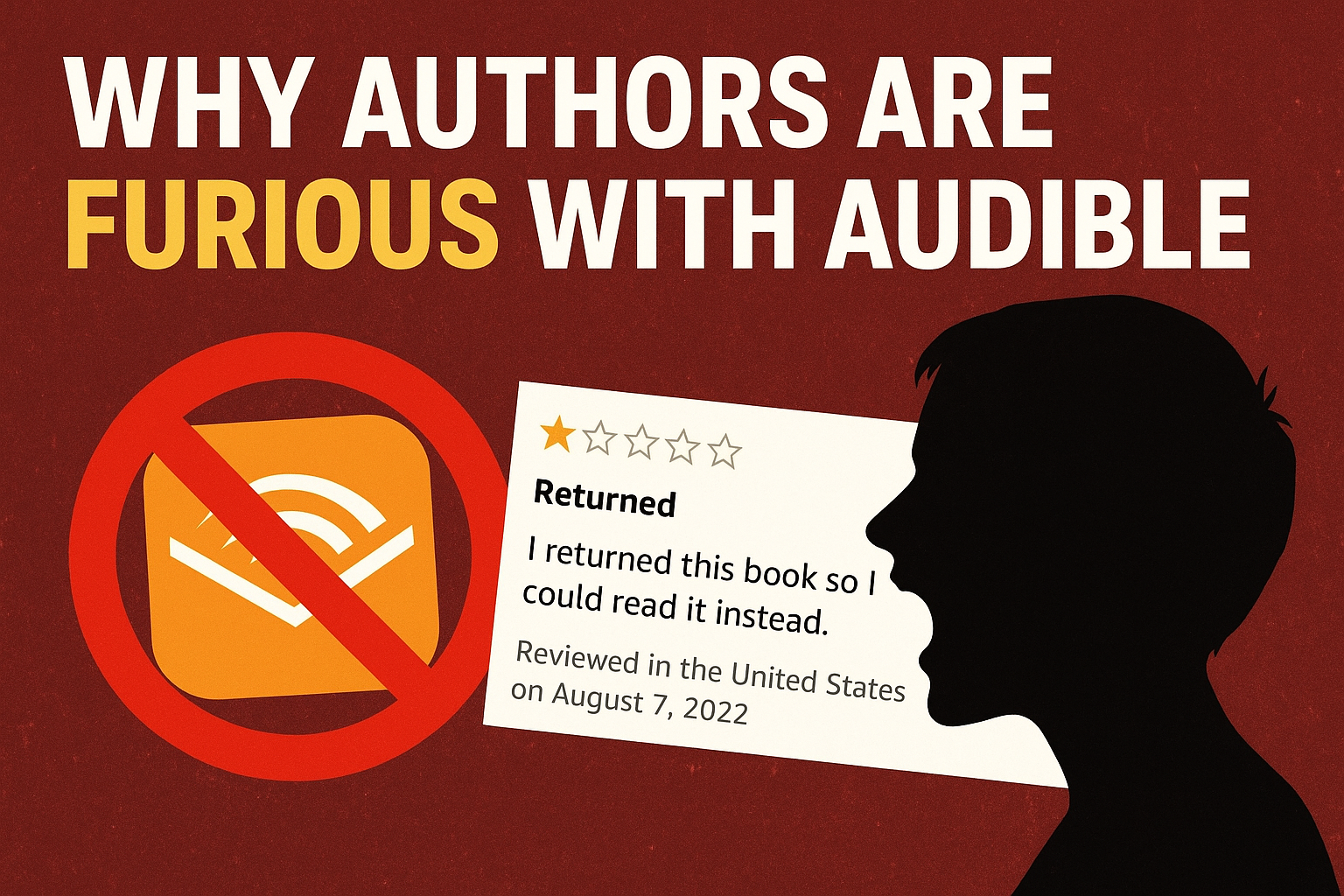
Audible’s “easy exchange” system once allowed customers to return audio books up to a year after purchase. The cost was deducted directly from the author’s royalties. Authors reported losses as high as 15%–50% per title. Many unknowingly took financial hits because returns aren’t clearly itemized in their dashboards.
In response to widespread criticism, Audible now limits refunds to within seven days. Many authors argue that’s still more than enough time to listen to a full audio book. They believe this process leaves creators uncompensated.
The GuardianScribeCountWriter Beware
AI Narration: Efficiency at What Cost?
Audible recently announced plans to roll out AI-generated voices for audio books—offering 100+ synthetic voice options and automating production. Author and narrator communities have raised the alarm. They warn that these robotic replacements strip away emotional depth. They also displace professional voice actors. Additionally, they undermine creative artistry.
Critics from the Society of Authors demand transparency and control. They urge Audible to allow authors to choose whether their audio book narrations are human or AI. They also want Audible to clearly label them.
The Guardian
Exclusive Contracts Limit Authors’ Freedom
A.C.X. offers exclusive distribution for a 40% royalty—non-exclusive offers only 25%. But exclusivity can lock you in for years. It blocks the ability to market your audio book across platforms like Spotify or Google Play. It’s a high-risk trade off: limited reach and price control for marginal income gains.
The opacity of pricing decisions adds to these challenges. This is why many authors feel tied to a system that gives them the shaft.
ScribeCount
Monopoly Accusations Are Building
A growing number of authors argue that Audible’s dominant market position is stifling competition. A class-action lawsuit claims that Audible’s 90-day exclusivity requirement constitutes unfair monopolistic behavior—limiting distribution and bargaining power for self-published authors.
Despite Audible defending its stance, more writers are choosing other platforms and speaking out.
Reuters
Spotify & New Platforms: A Glimmer of Hope—or Another Trap?
Spotify has entered the audio book arena, offering broader reach and different royalty structures. Some see this as a needed counterbalance to Audible’s dominance. Others warn it can be equally as murky. This is especially true when authors aren’t consulted on changes to licensing terms or royalty models.
The GuardianForbes+1
This Matters to Authors (and Readers Too)
Transparency matters: authors rarely know when or why audio book returns happen, slicing away at income. Creators deserve autonomy: AI should be a tool—not a replacement for the human art of storytelling. Healthy markets need competition: without fair alternatives, the power imbalance remains.
What Now? Join the Conversation
How do you feel about these changes? Are AI voices acceptable to you as a listener, or do they cross a line? Should authors have more control over how their work is distributed and priced?
Drop your thoughts in the comments—your voice matters.
Leave a Reply