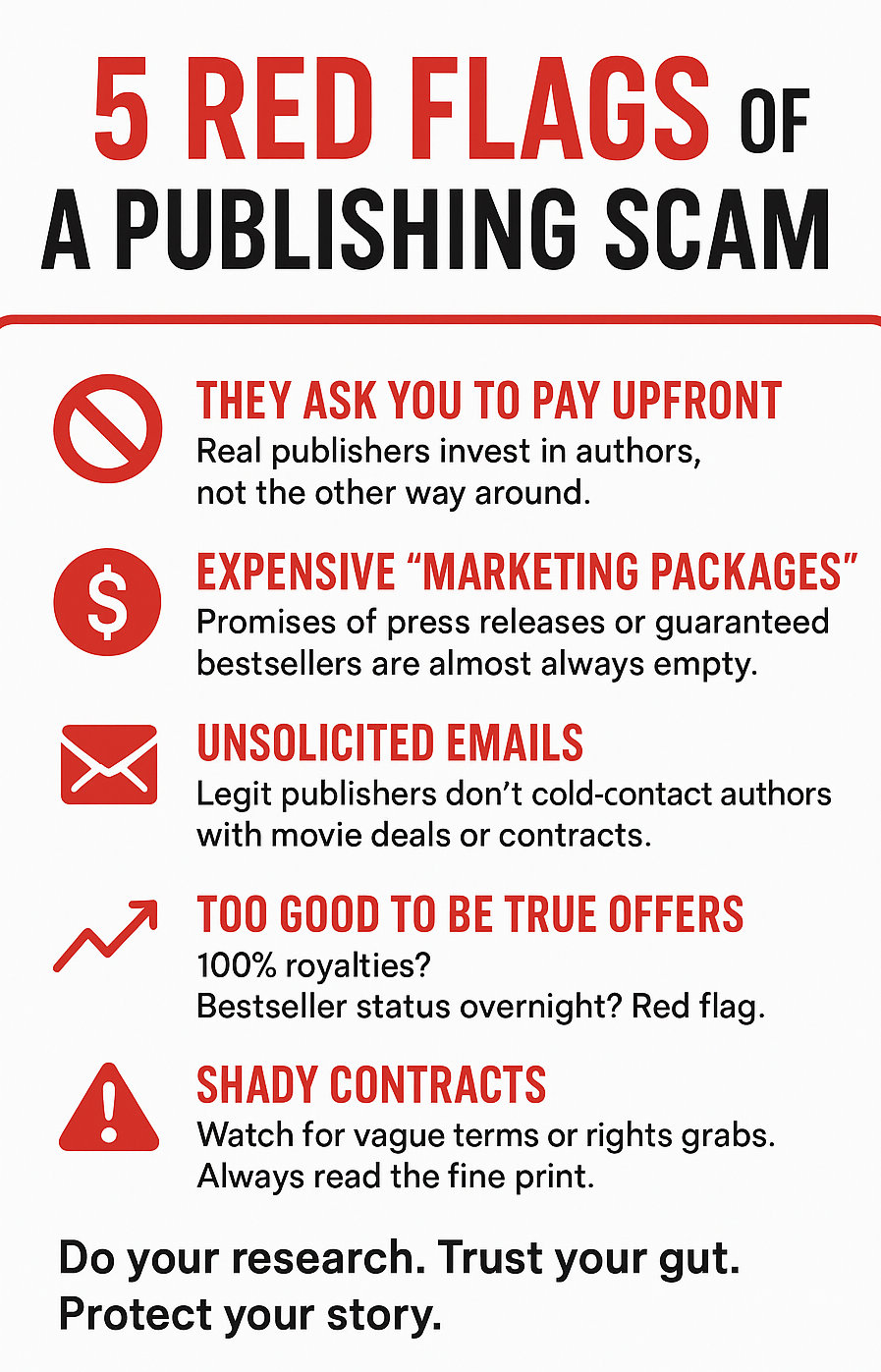

Publishing your book is a dream come true. But here’s the catch—some people out there want to take advantage of that dream. Publishing scammers prey on authors, especially new ones, by pretending to be legit companies while really just draining your wallet.
I recently ran into one on my TikTok, attempting to offer publishing and marketing wonders. After I verified I had completed most of what they were offering, I realized they were deceptive. The person on the other side called me a name in another language. Then they deleted their TikTok account.


As you can see the person was fishing and cut contact after being Racist.
The good news? Once you know the red flags, they’re easy to spot, and even easier to avoid. Let’s break it down.
How Publishing Scammers Work
1. Vanity presses in disguise
These “publishers” make their money from you, not your readers. They’ll charge thousands for editing, marketing, or even just printing your book—then do very little in return.
2. Fake agents and fake publishers
Have you ever received an email saying, “We love your book and want to turn it into a movie”? It sounds amazing, right? But real agents and publishers don’t cold-email random authors asking for upfront fees. That’s a classic scam move.
3. The reprint trick
Some companies claim they want to “reprint” your book. They offer you 100% royalties. It sounds too good to be true because… it is. Sooner or later, they’ll hit you with surprise fees.
4. Rigged contests and anthologies
“Congratulations! You’ve been selected for our exclusive anthology.” Translation: you pay to see your name in print, and almost everyone “wins.”
5. Fake marketing packages
This one hits after you’ve already published. They’ll sell you overpriced “press releases” or “guaranteed bestseller” campaigns that don’t actually move books.
Real-Life Bad Examples
These aren’t just theories—here are some names tied to shady or scummy practices:
- Vantage Press – once one of the biggest vanity presses, later sued and shut down.
- Tate Publishing – charged authors big fees, collapsed in scandal, and its leaders faced criminal charges.
- Austin Macauley Publishers – often called out as a vanity press despite branding itself as “hybrid.”
- Famous Poets Society – ran “contests” where everyone got in, as long as they bought the anthology.
- Leavitt Peak Press – known for fake reprint offers with outrageous royalty promises.
How to Protect Yourself
- Don’t pay to publish. A real publisher invests in you. If they ask for thousands up front, it’s a scam.
- Google before you sign. Check forums, watchdog sites, or just type “Company Name scam” into a search bar.
- Beware of flattery. If it sounds too good to be true (“movie deal,” “guaranteed bestseller”), it probably is.
- Read contracts carefully. Watch out for sneaky clauses that give away your rights.
- Trust your gut. If something feels off, walk away.
The Bottom Line
You worked hard on your book—you deserve better than to be tricked by scammers. The publishing world has plenty of honest, supportive paths to success. Stay sharp, do your research, and you’ll keep your money (and your rights) safe.
Further Reading & Sources
- Authors Guild – Publishing Scam Alerts
- Wikipedia – Vantage Press | Tate Publishing | Austin Macauley Publishers | Famous Poets Society
- Anne R. Allen’s Blog – Publishing Scammers on the Prowl
- Vanity Fair – Skyhorse Publishing’s House of Horrors
Leave a Reply